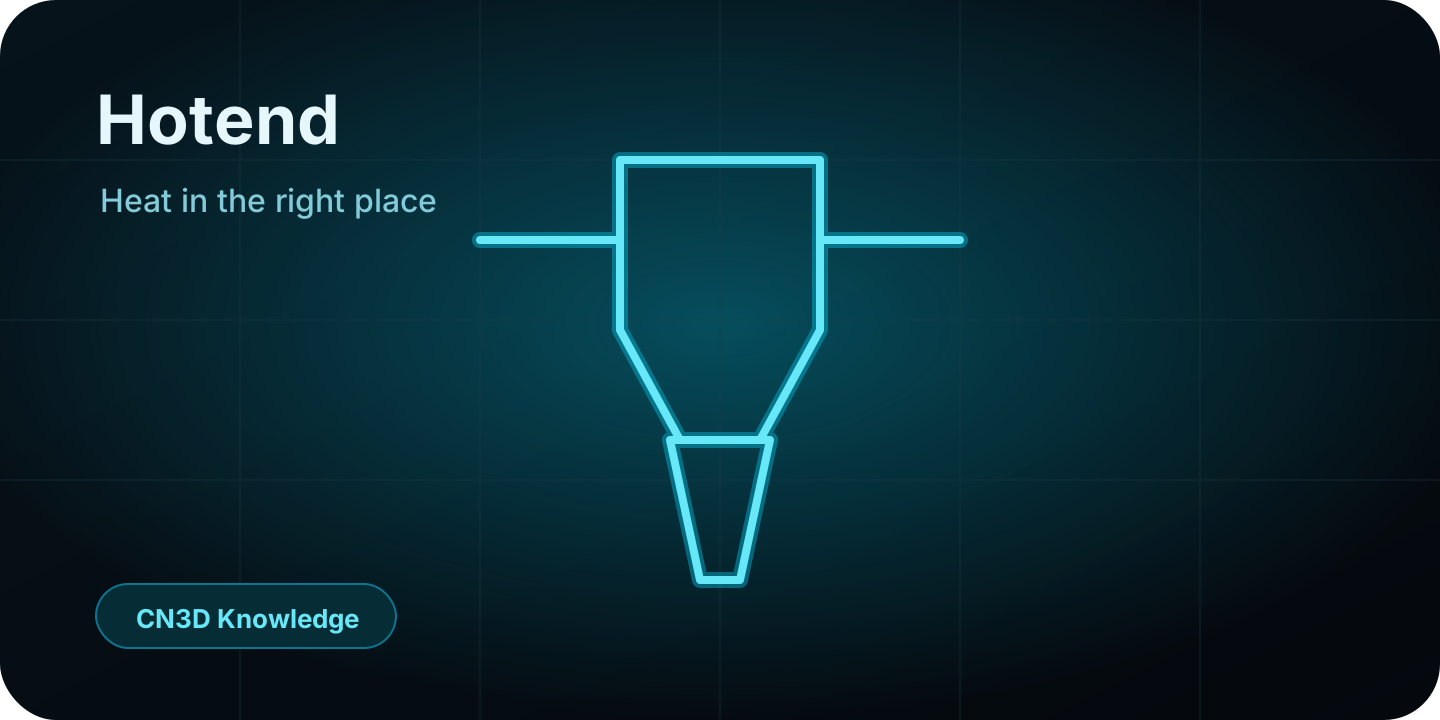
What the hotend actually does
The hotend turns solid filament into a controlled stream of molten plastic. It must heat the material, keep that heat in the right place, prevent heat from traveling too far upward and maintain a stable temperature while the printer changes speed.
Nozzle
The nozzle defines the final exit shape and diameter of the extrusion. A worn or partially clogged nozzle can cause inconsistent flow, poor surface finish and dimensional errors. Abrasive materials require hardened nozzles.
Heater block and heater cartridge
The heater block stores and transfers heat to the nozzle and melt zone. The heater cartridge supplies energy. If the heater is weak, badly mounted or undersized, temperature may drop during high-flow printing.
Thermistor or temperature sensor
The temperature sensor tells the printer what the hotend temperature is. Poor contact, wrong sensor type or loose installation can make the printer think it is at the correct temperature when the plastic is not behaving correctly.
Heatbreak
The heatbreak separates the hot melt zone from the cold side. Its job is to keep the transition zone short and controlled. A poor heatbreak or poor cooling can create heat creep, where filament softens too high in the hotend.
Heatsink and hotend fan
The heatsink removes heat from the cold side. The hotend fan must run reliably. If it is weak, blocked or reversed, heat can climb upward and soften filament before it reaches the melt zone.
Part cooling is different
Part cooling cools the printed plastic after it leaves the nozzle. Hotend cooling protects the cold side of the hotend. Confusing the two leads to bad troubleshooting decisions.
CN3D takeaway
A hotend is a thermal system, not just a nozzle. Many extrusion problems are really temperature stability, melt capacity or heat management problems. Diagnose the system before replacing random parts.
Usa esto en el flujo CN3D
Este artículo es parte del sistema más amplio de calibración y diagnóstico. Lee el concepto y luego aplícalo con la calculadora o el flujo diagnóstico.